National Preparedness Month
National Preparedness Month occurs each September to raise awareness about the importance of preparing for disasters and emergencies that could happen at any time.
How much water should I keep on hand for emergencies?
After a disaster, it’s critical that you have drinking water on hand in case the tap water is unavailable.
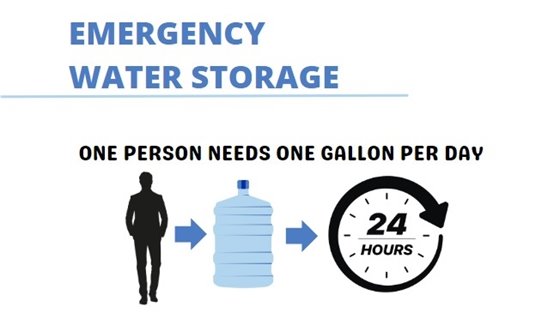
1 gallon per day, per person plus enough for your pets. Minimum 3 day supply is recommended, but a week of water can't hurt.
Use these guidelines to decide how much water should you set aside for use in an emergency:
- As a general rule, you need at least one gallon of water per person per day (half a gallon for drinking; half a gallon for cooking and cleaning).
- This amount will vary depending on age, activity, physical condition, and diet.
- If it is hot outside, you will need more water. Double the normal amount if it is very hot.
- Children, nursing mothers, and sick people require more water.
- Some additional water should be on hand for medical emergencies.
There are several ways you can make sure your emergency water supply stays fresh.
- Purchase commercially bottled water, keep it sealed, and replace it after its “use by” date.
- Purchase a food-grade water-storage container from a camping supply store, thoroughly clean and rinse it, and fill it with water in accordance with the manufacturer’s instructions.
- Store your water in a cool, dry place. If you are not using commercially bottled water, replace it every six months.








 Share on Facebook
 Share on Twitter
 Share via Email
